
Why Market Structure Matters
Before you place your first trade, you need to understand where trades actually happen. It's not magic — it's a system. And like any system, it has rules, participants, and a structure that determines how everything works.
Most people jump straight into technical analysis or looking for hot tips. But that's building a house on sand. You'll be confused by terms traders use casually. You'll misunderstand how orders get filled. You'll miss opportunities because you don't know how markets actually function.
Here's what we'll cover: the physical and digital infrastructure where trading happens, the different types of market participants, and the key terminology that everyone in finance uses. By the end, you'll understand the plumbing — not just the surface.
Think of this as learning the rules of the game before you play. You wouldn't play chess without knowing how pieces move. Markets work the same way.
Stock Exchanges: Where Trading Happens
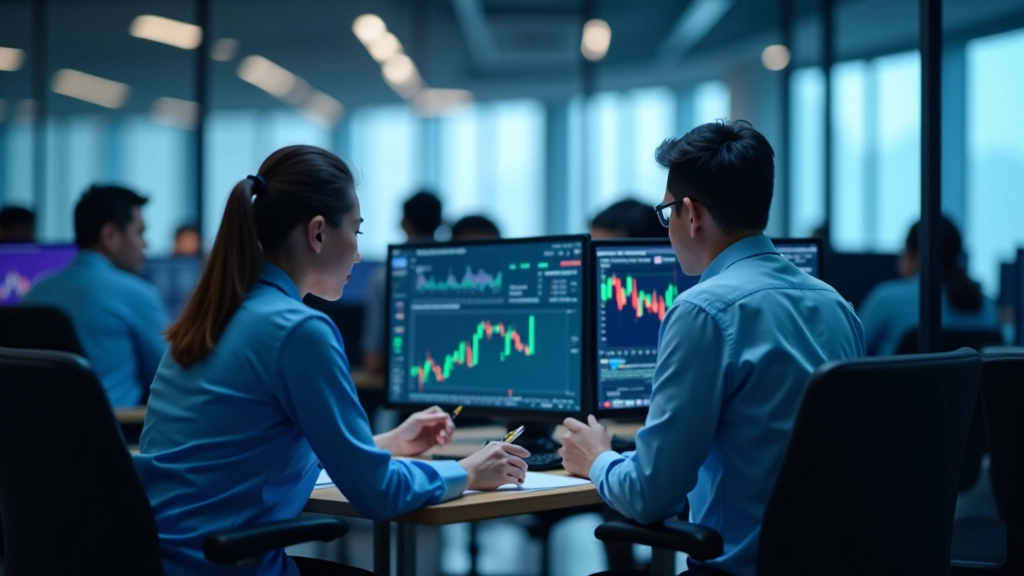
An exchange is a marketplace. That's the simplest way to think about it. Just like a farmer's market has vendors and buyers, a stock exchange has companies listed and investors trading.

In Singapore, the primary exchange is the Singapore Exchange (SGX). It's where shares of listed companies trade. Companies go public on SGX, and investors buy and sell their shares there. SGX handles roughly 700+ listed companies across multiple sectors — banking, property, manufacturing, technology.
An exchange isn't owned by the companies or the traders. It's a regulated institution with its own rules. Companies must meet listing requirements — financial thresholds, corporate governance standards, disclosure requirements. Once listed, their shares can be bought and sold by anyone with a trading account.
The exchange itself doesn't buy or sell stocks. It provides the platform, sets the rules, monitors trading, and ensures everything runs fairly. Think of it as the referee and the field at the same time.
Key Point: An exchange is infrastructure. It doesn't make decisions about which stocks to trade — it's a neutral platform where supply and demand meet.
Market Participants: Who's Actually Trading
Markets don't move by themselves. People (and algorithms, but we'll get to that) make trades. Understanding who these participants are helps you understand market behavior.
Retail Investors
People like you. Individual traders with brokerage accounts. We're the smallest participants by volume, but there's millions of us. We trade for retirement, growth, or active income.
Institutional Investors
Pension funds, mutual funds, hedge funds. They manage billions. A single trade from them can move the market. They're regulated heavily and must disclose their holdings.
Market Makers
Firms that provide liquidity by constantly buying and selling. They profit from the spread (difference between buy and sell price). Without them, markets would freeze.
Brokers & Dealers
Intermediaries who execute your trades. They connect you to the exchange. They're regulated and must follow strict rules about order execution and client protection.
Each participant has different goals. A retail investor might hold for years. A market maker holds for seconds. An institution might have a 5-year thesis. But they're all trading on the same platform with the same rules.
Key Terminology You'll Encounter
Here's the language of markets. You'll hear these terms constantly, so let's define them clearly.
Bid & Ask
The bid is what someone's willing to pay. The ask is what someone's willing to sell for. The difference is the spread. If you see "Bid: $10.50, Ask: $10.55" — that's a 5-cent spread. That's the cost of trading immediately.
Volume
How many shares traded in a given period. High volume means lots of activity, lots of buyers and sellers. Low volume means few trades. Volume matters because it affects how easily you can buy or sell.
Liquidity
How easily you can convert a stock to cash without affecting its price. Blue-chip stocks (large, stable companies) are highly liquid — thousands of shares trade daily. Smaller stocks might be illiquid — you could move the price just by trying to sell.
Market Cap
A company's total market value. Stock price × total shares outstanding. A $10 stock with 100 million shares = $1 billion market cap. This determines whether a stock is "large-cap," "mid-cap," or "small-cap."

Market Hours
SGX trading happens 9:00 AM to 5:00 PM Monday-Friday Singapore time. Outside these hours, you can't trade on the main market. Some brokers offer after-hours trading, but it's limited and risky.
How Orders Work
When you want to buy or sell a stock, you place an order through your broker. Your broker sends it to the exchange. The exchange's systems match your order with someone else's order — a buyer with a seller at the same price.
There are different order types. A market order says "buy this stock immediately at whatever the current price is." You'll get filled instantly, but you don't control the exact price. A limit order says "buy this stock but only at $10.50 or lower." You control the price, but it might never fill if the stock never reaches that level.
Orders get matched in sequence — typically price priority first (best price gets filled first), then time priority (whoever placed the order first gets filled first). This is why order placement matters.

What You've Learned
You now understand the basic infrastructure of financial markets. You know what an exchange is and what it does. You know who participates in markets and why. You've learned the core terminology that traders use constantly.
This foundation matters. A lot of people skip this and wonder why they're confused later. But you're not skipping it. You're building properly.
In the next module, we'll dig into technical analysis — how to read charts and spot patterns. That's where things get practical. But first, make sure this material is solid in your mind. These concepts come up constantly in everything that follows.
Educational Disclaimer
This article is for educational purposes only. It explains how financial markets function and provides information about market structure and terminology. Nothing in this content should be interpreted as financial advice, investment recommendations, or guidance on specific trading decisions.
Trading and investing in financial markets involve substantial risk of loss. Market conditions vary, and past performance doesn't guarantee future results. Before making any trading or investment decisions, consult with qualified financial professionals and conduct your own thorough research. Only trade or invest money you can afford to lose.